

At David Turner Designs, we are committed to building digital tools that help small businesses, local contractors, and growing e-commerce shops punch above their weight. We understand that as a small business owner, your website isn’t just a “nice-to-have”; it is your 24/7 storefront, your lead generator, and often, your first impression.
Recently, you may have heard headlines about new strict deadlines for web accessibility affecting municipalities and government bodies. This is creating confusion. While regular businesses aren’t bound by those specific government dates, the legal and business landscape has changed fundamentally for every organization with a website.
It’s time we talk about inclusive design, commonly known as ADA (Americans with Disabilities Act) website compliance.
The Landscape of Title III (Private Businesses)
If your website serves the public—whether you are selling power tools online or offering plumbing services locally—you are likely a place of “Public Accommodation” under Title III of the ADA. For years, the legal requirements here have been slightly vague, but that period has ended. The Department of Justice and the courts have now definitively landed on a standard: WCAG 2.1 Level AA.
Failing to meet this standard isn’t just a technical glitch; it’s a significant risk. The US is seeing a record surge in Title III lawsuits targeting small businesses, with thousands of digital accessibility lawsuits expected this year. Industries that seem simple—including basic contractor service sites or small shops—are being targeted because their sites are often the easiest to audit for violations.
But This Isn’t Just About Lawsuits
Legality is a necessary shield, but the real magic of compliance is how it transforms your business. When we design a site to be accessible, we are designing it to be better for everyone.
1. Expanding Your Market Reach: In the US, one in four adults has a disability that affects how they interact with the world. By ignoring accessibility, a business is actively turning away 25% of potential clients. Accessible design means a contractor’s form can be filled out by someone with a motor impairment, or a retail product can be purchased by someone with visual impairments. We don’t want to exclude a single customer.
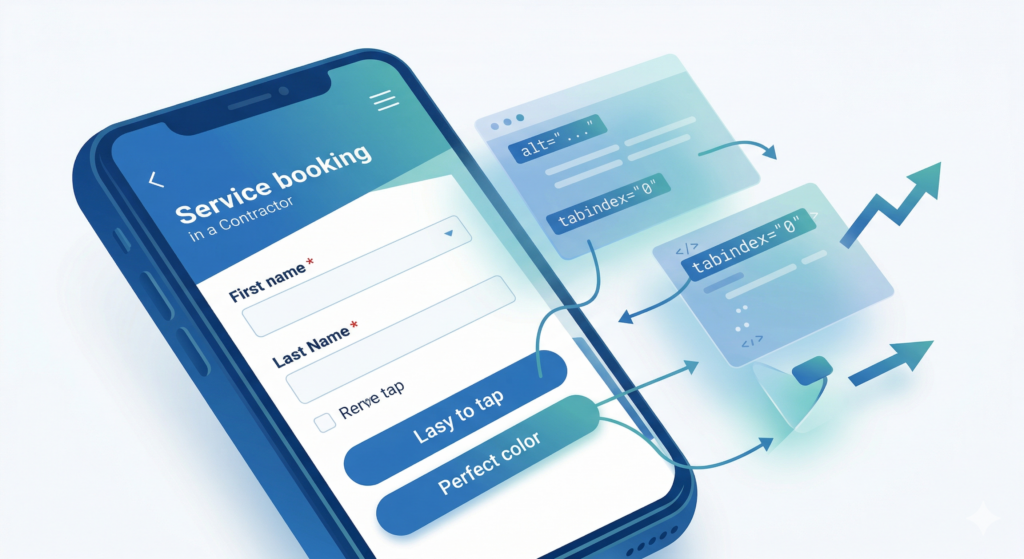
2. Improved User Experience (and SEO!): Many “accessible” features are actually “great user interface” features. Larger buttons (making things easier to tap on mobile), clear navigation structure (making it easy to find a service page), and optimized image descriptions (which screen readers use but also massively boost your SEO ranking with search engines). Making your site compliant often makes it load faster and rank higher.
Looking Ahead: David Turner Designs as Your Accessibility Partner
Because the landscape is shifting from “good to do” to “essential,” David Turner Designs is evolving, too. While we are already helping our municipal clients meet their hard deadlines, we are officially integrating ADA compliance and WCAG analysis into our service catalog for current and future private clients.
For new projects, inclusive design will be baked into our standard process. For our existing partners, we will be rolling out a prioritized advisory plan soon.
Being proactive is smart business. An inclusive, well-built website doesn’t just protect you from legal risks; it builds goodwill, improves your visibility, and ensures that when a client needs your service, your website lets everyone through the door.
Key Action Item for DTD Clients:
-
Action Required: If you are an e-commerce vendor or a supplier to local government, your priority for an accessibility audit is high.
-
Action Suggested: For all other clients, we recommend scheduling an advisory call within the next three months to discuss a simple accessibility roadmap. We want to help you be ready before an issue arises.